
Robotics in Manufacturing: What Indian Factories Will Look Like by 2030
From collaborative robots to automated intralogistics, a look at the automation technologies that will define India's manufacturing boom over the next decade.
How intelligent design, localized supply chains, and algorithmic compensation are driving down the cost of premium BLDC motors.
Continue reading »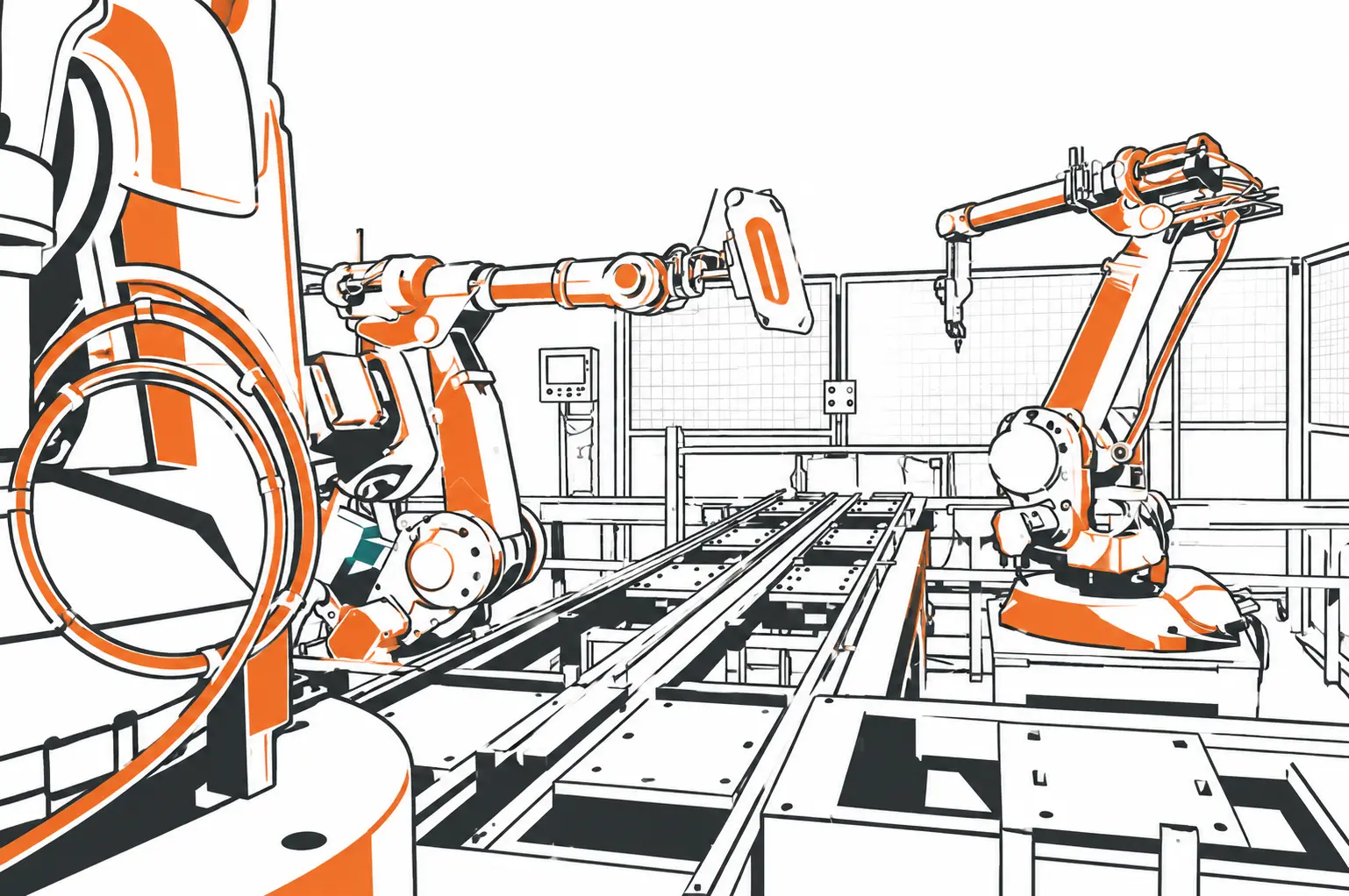
From collaborative robots to automated intralogistics, a look at the automation technologies that will define India's manufacturing boom over the next decade.
By creating virtual replicas of physical motors, engineers can simulate wear, predict failures, and optimize efficiency without ever touching the hardware.
A comprehensive breakdown of how a BLDC motor controller is built, from the power electronics to the Field-Oriented Control firmware.
How Indian manufacturing and logistics are skipping a technological generation, moving straight from manual carts to intelligent AMRs.
Why off-the-shelf electronics limit robotic capabilities, and how designing custom PCBs from scratch leads to tighter integration and better performance.
How artificial intelligence is turning blind industrial motors into smart, self-diagnosing machines, preventing millions in downtime.
A deep technical dive into the heart of electric vehicles. From traction inverters to SiC MOSFETs, understand the engineering behind EV motor control.
Why the future of industrial robotics relies on bringing neural networks to the edge. Latency, security, and the hardware that makes local AI possible.
Humanoids require incredible torque density, dynamic responsiveness, and thermal management. Here is why off-the-shelf motors fail, and why custom BLDC systems are the only viable path forward.
A deep dive into how we designed the custom motor controller that powers Entlar ceiling fans — from gate driver selection to real-time thermal protection algorithms.
Brushless DC motors are becoming the de facto actuator choice for modern robotics. We examine why BLDC technology is poised to dominate the next decade of robotic systems — from collaborative arms to autonomous mobile robots.
A technical comparison of Brushless DC and Electronically Commutated motor architectures for the residential ceiling fan market, and why the tradeoffs led us firmly to BLDC.
Artificial intelligence is entering the motor control loop — not as a buzzword, but as a set of practical, deployable techniques that are measurably improving efficiency, reliability, and precision in electric motor systems.
Hall sensors and encoders have been the standard for BLDC position sensing for decades. Sensorless control promises the same performance without the failure modes. Is the technology ready for mainstream adoption?
We are Entlar — a technology company building the next generation of BLDC ceiling fans. This is our story, our mission, and what we are building.
Industry 4.0 is not a single technology — it is the convergence of cyber-physical systems, IoT, cloud computing, and AI into a new paradigm for manufacturing. Here is what it actually means for engineers on the factory floor.
Most ceiling fan manufacturers focus on motor speed. We focused on aerodynamics first. Here is what the fluid dynamics actually tell us about efficient air delivery in residential spaces.
From humanoid robots entering industrial production to the software-defined robot revolution — we survey the most significant developments reshaping robotics engineering in 2026.
Hall-effect sensors are a common failure point in BLDC motors. We designed our fan to start reliably from standstill using only back-EMF zero-crossing detection — and the maths behind it is elegant.
Designing a PCB for a BLDC motor controller is not like designing digital logic. High currents, fast switching transients, and extreme thermal demands require discipline at every stage of the design process.
A digital twin is a continuously synchronized virtual model of a physical system. In industrial automation, digital twins are moving from research project to operational standard — changing how engineers design, commission, and maintain complex systems.
The world faces a structural labor shortage that is accelerating in manufacturing, logistics, and agriculture. Robotics and AI are not causing this problem — they are the most viable solution to it.
Electric motors consume over 45% of global electricity. Designing more efficient motors is not just good engineering — it is one of the highest-leverage interventions available for reducing global energy consumption.
Building a hardware startup in India is harder than building a software startup — and more rewarding. Here is an honest account of the journey from first prototype to scalable product, based on Entlar's own experience.